Onsen & Sento Culture: Etiquette & Essentials for Traditional Japanese Baths


Stepping into a natural hot spring (onsen) or a neighborhood public bathhouse (sento) is one of the most rejuvenating and culturally immersive experiences you can have in Japan. For centuries, communal bathing has served as an important part of Japanese wellness, social connection, everyday life, and spiritual purification.
However, for first-time international visitors, the prospect of entering a communal, clothing-free bath can evoke a bit of anxiety. Knowing the unwritten rules, step-by-step bathing etiquette, and cultural nuances in advance turns what might initially feel intimidating into a relaxing and memorable highlight of your trip.
Historical Context: Japan's Bathing Traditions
Japan's relationship with bathing extends back centuries, influenced by the country's abundant hot springs, Buddhist purification practices, and the development of communal bathing establishments. Early bathing facilities were associated with Buddhist temples, where bathing could serve both practical and religious purposes. Over time, public bathhouses became increasingly common, particularly during the Edo period (1603–1868), when urban residents relied on shared facilities for personal hygiene and social interaction. Today, Japan's hot springs are classified according to their chemical composition, with different concentrations of substances such as sulfur, iron, and dissolved salts contributing to variations in color, scent, and bathing characteristics.
The neighborhood sento eventually became an important gathering place, offering more than an opportunity to wash. These establishments encouraged everyday interaction among neighbors, reinforcing the idea that communal bathing could be both a personal ritual and a shared cultural experience. Today, traditional bathhouses coexist with modern hot spring resorts, preserving a distinctive aspect of Japanese daily life.

1. Onsen vs. Sento: Understanding the Difference
Before removing your shoes, it helps to understand the two distinct types of bathing establishments in Japan:
Onsen (温泉): Natural geothermal hot springs fed by mineral-rich volcanic groundwater. To be officially classified as an onsen, the water must reach at least 25°C (77°F) at the springhead and contain specific natural minerals (such as sulfur, iron, or magnesium). Onsen are often situated in scenic mountain towns (like Hakone, Kinosaki, or Noboribetsu) or within traditional inns (ryokan).
Sento (銭湯): Public neighborhood bathhouses fed by heated tap water rather than natural springs. Historically important in communities where private bathing facilities were uncommon, sento remain everyday gathering spaces throughout cities like Tokyo and Kyoto. Some feature decorative tilework or painted murals of Mount Fuji, although these are not universal.
While both offer communal bathing experiences, the primary distinction lies in the water source and the establishment's traditional role. An onsen is defined by Japanese law as natural spring water, while a conventional sento serves as a public bathing facility. Some public bathhouses also use genuine hot spring water, so the categories can overlap.

2. Step-by-Step Bathing Etiquette
The overarching rule of Japanese bathing is simple: the shared bathwater is strictly for soaking and relaxing, never for washing. Cleaning happens before entering the communal baths.
Step 1: Entry & Changing Room Protocols
Shoes Off: Remove your street footwear at the entrance (genkan) and place them in a shoe locker or designaed storage before proceeding to the facility, likely stepping onto the raised wooden or tatami flooring.
Separation of Sexes: Most traditional communal baths have separate men's and women's areas. Pass through the entrance curtains (noren) and look for characters which mark the differing facilities. Blue curtains marked with 男 (otoko) indicate the men’s bath; red or pink curtains marked with 女 (onna) indicate the women’s bath.
Locker Room: Disrobe completely in the changing area and store all clothing, large towels, and personal belongings in a designated basket or locker. While becoming more widely-accepted in some facilities, swimsuits are typically prohibited in traditional baths.
Step 2: The Modesty Towel & Wash Station
The Modesty Towel (Tenugui): Take only your small modesty towel into the bathing area. You can use this small towel to cover yourself discreetly while walking between the changing room and the wash stations, but it should never enter the bathwater.
Seated Wash First: Take a seat on a small stool at a washing station, typically equipped with a handheld showerhead or faucet. Some facilities provide soap and shampoo, while others require you to bring or purchase your own. Remain seated when practical to avoid splashing neighboring bathers.
Rinse Thoroughly: Wash your hair and body completely, ensuring all soap suds are thoroughly rinsed off before entering the baths. Some establishments also encourage kakeyu, the practice of pouring warm bathwater over the body before soaking to help acclimate to the temperature.
Step 3: Entering & Soaking in the Thermal Waters
No Towels in the Water: Never submerge your modesty towel in the bathwater. Bathers typically fold their small towel and rest it on top of their head while soaking, or place it on a dry rock along the pool edge.
Keep Hair Up: Long hair must be tied back or secured with a clip so it never touches the bathwater.
Ease In Gently: Enter slowly, allowing your body to adjust to the temperature. Many Japanese baths are maintained around 40–42°C (104–108°F), although temperatures vary considerably between facilities and individual pools. Soak quietly without splashing, swimming, or diving.
Quiet Relaxation: Onsen are serene sanctuaries, speak in soft, hushed tones. Photography and mobile phones are generally prohibited in communal bathing and changing areas to protect other guests' privacy.
Step 4: Post-Soak Routine
Wipe Down Before Re-Entering Lockers: Before returning to the changing room, use your wrung-out small towel to remove excess water from your body. This helps keep shared floors dry and comfortable for other guests.
Hydrate & Cool Down: Enjoy a cold drink after your bath—traditional favorites include fresh Japanese fruit milk, green tea, or cold water available from the post-bath lounge or small vending machines.
Take Your Time: Allow your body to cool naturally before getting dressed. Some bathers choose not to rinse off immediately after soaking in mineral-rich spring water, although individual facilities may recommend otherwise depending on the spring's composition.
3. Navigating Tattoos in Japanese Baths
Historically associated in some contexts with the yakuza (organized crime groups), visible tattoos remain restricted at many traditional public onsen and sento. However, as international tourism grows, policy approaches are evolving rapidly:
Tattoo-Covering Patches: Some establishments permit small tattoos to be covered with skin-toned, waterproof patches or specially designed coverings. Always confirm the facility's policy before arriving, as covering a tattoo does not automatically guarantee admission.
Seeking Tattoo-Friendly Establishments: Towns like Kinosaki Onsen in Hyogo Prefecture and Beppu in Oita Prefecture have made all public municipal baths 100% tattoo-friendly for international travelers, although individual facilities maintain their own policies.
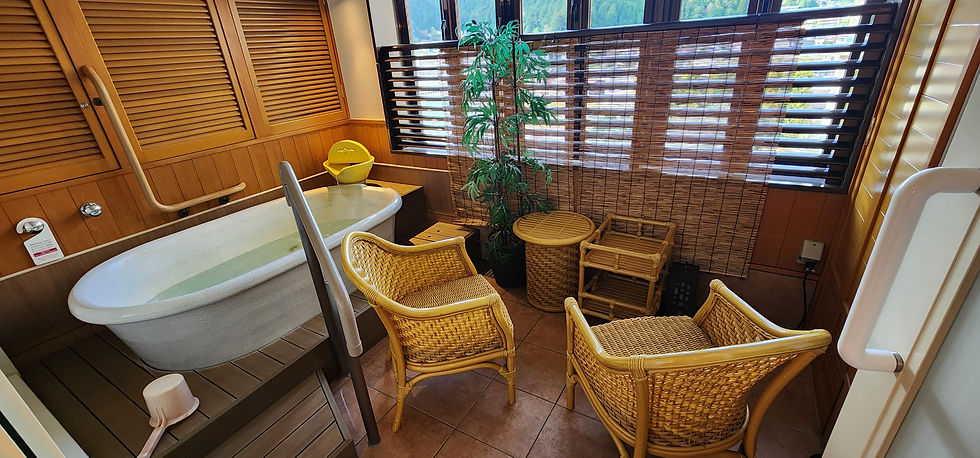
Private Baths (Kashikiri or Kazokuburo): If you have extensive body art or simply prefer a private experience, consider reserving a private bath. Some ryokan offer rentable bathing rooms, while others feature guest accommodations with attached private outdoor baths (rotenburo).
Planning Note: Research tattoo policies directly through the establishment's official website or contact the facility in advance. Do not assume that all public baths within the same town follow identical rules.

4. The Ryokan & Onsen Experience
For a more immersive hot spring retreat, consider staying overnight at a traditional Japanese inn (ryokan).
A ryokan stay combines hospitality, regional cuisine, and traditional accommodation, often allowing guests to experience bathing as part of a broader cultural retreat.
What to Expect:
Yukata Etiquette: Many establishments provide a lightweight cotton robe (yukata) for wearing around the inn. Wrap the left side over the right side, securing it with the waist sash (obi). The opposite wrapping direction is traditionally associated with dressing the deceased. Check whether the establishment permits guests to wear their yukata in dining rooms or public spaces.
Kaiseki Dining: Some traditional inns offer elaborate multi-course seasonal meals (kaiseki), highlighting local ingredients and regional culinary traditions. Depending on the establishment, dinner may be served in your room, a private dining area, or a communal restaurant.
Futon Sleep: In traditional tatami rooms, futon bedding is often prepared on the floor during the evening, sometimes while guests are dining. Many contemporary ryokan also offer Western-style beds or hybrid accommodations.
Multiple Bathing Opportunities: Overnight guests may enjoy access to communal bathing facilities throughout designated hours, with some establishments offering indoor baths, open-air pools, and private bathing options.
Planning Note: Confirm whether meals, private baths, and bathing taxes or additional fees are included in your accommodation rate. Some ryokan also establish specific check-in and dinner times, making advance planning particularly important.
5. Practical Considerations for First-Time Visitors
Although traditional Japanese bathing is generally straightforward once you understand the customs, a few additional considerations can make the experience more comfortable.
Personal Comfort: Communal nudity is customary in traditional baths, but private facilities offer an alternative for visitors who prefer greater privacy.
Temperature Awareness: Hot baths can cause dizziness or lightheadedness, particularly after prolonged soaking. Stay hydrated, enter gradually, and leave the water if you begin feeling unwell. Visitors who are pregnant or have cardiovascular or other relevant medical conditions should seek appropriate medical guidance before using very hot baths.
Children & Family Bathing: Age restrictions, supervision requirements, and rules regarding children entering opposite-sex bathing areas vary by location and facility. Families should verify these policies in advance.
Bathing With Open Wounds or Illness: Avoid communal bathing when experiencing contagious illness, gastrointestinal symptoms, or open wounds that could compromise hygiene.
Mixed-Gender Bathing: Some traditional konyoku baths accommodate mixed-gender bathing, but their rules differ considerably. Certain facilities require designated bathing garments, while others follow separate, more bare, arrangements.

Essential Japanese Bathing Terms
Onsen (温泉): Natural hot spring water meeting Japan's legal temperature or mineral criteria.
Sento (銭湯): Traditional public bathhouse, generally using heated water.
Rotenburo (露天風呂): Outdoor bathing pool, often surrounded by natural scenery.
Kashikiri-buro (貸切風呂): Private bath reserved for exclusive use.
Kakeyu (掛け湯): Pouring warm water over the body before entering a communal bath.
Yukata (浴衣): Lightweight traditional robe commonly provided at Japanese inns.
Noren (暖簾): Fabric curtains often used at the entrances to shops, restaurants, and bathing establishments.
Fun Facts & Hidden Trivia
The custom of hadaka no tsukiai: Literally referring to socializing without clothing, hadaka no tsukiai describes the idea that communal bathing can temporarily soften social distinctions and encourage more open, informal interaction.
Mount Fuji Murals: Painted Mount Fuji scenes are often traced to 1912, when artist Kiyoshi Kawagoe created a large bathhouse mural that helped popularize the distinctive decorative style. A recognizable feature of Tokyo-area sento during the twentieth century, these dipictions transform ordinary bathing spaces into colorful expressions of Japanese landscape art.
The Bathhouse Social Circle: Traditional sento have long served as neighborhood gathering places, where residents could exchange conversation and maintain community connections outside their homes.
Japan's Geothermal Geography: Japan's volcanic landscape contributes to the country's abundance of natural hot springs, with spring characteristics varying according to local geology.
Bathing as a Daily Ritual: Unlike many Western spa traditions that emphasize occasional luxury treatments, Japanese bathing culture also encompasses everyday routines centered on cleanliness, relaxation, and communal consideration.
Experiencing Japan Through Its Bathing Traditions
From steaming mountain hot springs to neighborhood bathhouses tucked between city streets, Japan's bathing traditions offer a distinctive window into the country's cultural values and everyday customs. Understanding the etiquette is not simply about following rules; it is about respecting a shared space where cleanliness, consideration, and relaxation have been cultivated over generations.
Whether visiting a traditional sento in Kyoto, soaking beneath the forest canopy of Hakone, or enjoying a private bath at a mountain ryokan, approaching the experience with curiosity and cultural awareness allows you to appreciate one of Japan's most enduring traditions.

Plan smarter. Travel deeper.


Comments