Mastering Japan's Transit: Shinkansen, IC Cards & Luggage Forwarding

Japan boasts one of the most efficient, punctual, and extensive public transportation networks in the world. From high-speed bullet trains (Shinkansen) traveling at speeds approaching 200 mph to intricate subway systems and scenic regional railways, navigating the country can become one of the most memorable parts of the journey itself.
However, for first-time visitors or those with multi-city itineraries, understanding the differences between railway operators, transit passes, IC cards, baggage restrictions, and luggage forwarding services can initially feel overwhelming.
Japan's transportation system is remarkably accessible once you understand how its various components work together. With a little preparation, travelers can move seamlessly between major cities, historic districts, mountain towns, and rural destinations without relying on rental cars or expensive private transfers.
This field guide breaks down the essentials of Japanese transportation, helping you navigate the country efficiently, confidently, and with considerably less luggage in tow.
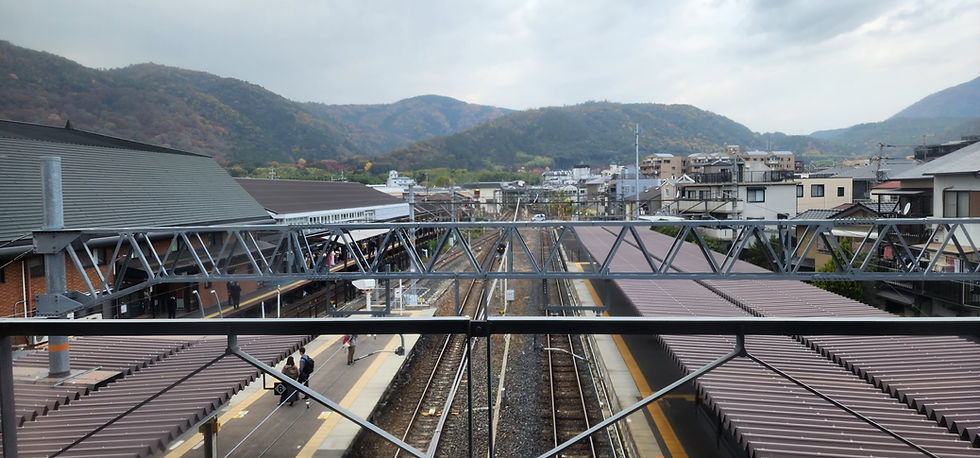
1. Urban Transit & IC Cards: Suica, PASMO & ICOCA
An IC card is a rechargeable, contactless smart card used to pay for public transportation throughout much of Japan. Rather than purchasing individual tickets for every subway or train journey, travelers simply tap their card at the ticket gates which automatically calculate and charge ride totals. Surprisingly versatile, IC cards can also be used for purchases at participating convenience stores (konbini), vending machines, lockers, and retail establishments.
Understanding the Major IC Cards
Suica: Primarily associated with JR East and the greater Tokyo region.
PASMO: Commonly issued by private railway, subway, and bus operators around Tokyo.
ICOCA: Associated with JR West and widely used throughout the Kansai region, including Kyoto, Osaka, and Kobe.
Although these cards originate from different railway networks, Japan's major IC card systems are largely interoperable. A Suica purchased in Tokyo, for example, can generally be used on compatible trains and buses in Kyoto or Osaka.
Important distinction: IC card interoperability does not mean every train or journey can be paid for with a simple tap. Certain rural railways, limited express services, and journeys crossing separate IC card service areas may require additional tickets.
Digital IC Cards & Mobile Wallets
For travelers using compatible iPhones, adding a digital Suica, PASMO, or ICOCA to Apple or Samsung Wallets can eliminate the need for a physical transit card, although you should always carry a version with you upon initial travels until verifying usage.
To add a card:
Open Apple Wallet.
Select the option to add a new card.
Choose Transit Card.
Search for Suica, PASMO, or ICOCA.
Add funds using a supported payment method.
Once configured, the card can be used at compatible ticket gates and payment terminals.
Foreign-issued card compatibility varies by bank and payment network, so it is worth confirming that your card can successfully scan at kiosks and recharge your transit balance before relying on a digital-only option.
Physical Cards & Tourist Options
Physical IC cards remain useful for travelers who prefer not to rely on their phones. Welcome Suica, a visitor-oriented card issued by JR East, is designed for short-term travelers and does not require the standard refundable deposit. It is valid for 28 days from first use, and remaining balances are generally nonrefundable.
Standard rechargeable IC cards are also available through participating railway stations and service counters, subject to local availability.
The former PASMO PASSPORT tourist card was discontinued in August 2024 and should not be included in current travel planning.
Tap-In, Tap-Out Etiquette
At most urban railway stations, travelers tap their card when entering and exiting the ticket gates. The appropriate fare is automatically deducted based on the journey. If your balance is insufficient, use a fare-adjustment machine or speak with station staff before attempting to exit. You will be stopped should you attempt to depart without paying in full.
Destination Loading Field Note: IC cards are ideal for daily transportation, but they do not replace every regional rail ticket or Shinkansen reservation. Think of them as your everyday transit wallet rather than an unlimited travel pass.
2. Navigating Japan's Railway Network
One of the most important distinctions for first-time visitors is that Japan's railways are not operated by a single company.
The Japan Railways Group (JR) operates extensive regional and intercity networks, while numerous private railway companies manage additional routes, particularly around major metropolitan areas. Tokyo alone includes JR East, Tokyo Metro, Toei Subway, and several private railway operators. In Kansai, travelers may encounter JR West alongside Hankyu, Keihan, Kintetsu, and other operators.
Understanding Common Train Categories
Local: Stops at every station along its route.
Rapid: Skips selected stations to provide faster regional service.
Express: Generally stops at fewer stations, although terminology varies by operator.
Limited Express: A faster service that may require an additional limited-express ticket or seat reservation.
Shinkansen: Japan's high-speed intercity railway network, generally requiring a separate ticketing arrangement from ordinary local trains.
A train being labeled express does not automatically mean it requires an additional fee. Always check the specific railway operator and service.
JR Passes vs. Individual Tickets
The nationwide Japan Rail Pass allows eligible international visitors to travel on participating JR services during a designated validity period. However, it is not automatically the most economical choice. For travelers primarily visiting Tokyo, Kyoto, and Osaka, purchasing individual Shinkansen tickets and using an IC card for local transportation may cost less. Regional JR passes can provide better value when exploring a concentrated area, particularly if the itinerary includes multiple longer rail journeys. Before purchasing a pass, compare the total cost of your planned routes against the pass price and confirm which services are covered.
Destination Loading Field Note: Build your itinerary first and choose your rail pass afterward. Buying an expensive nationwide pass before calculating actual travel distances is one of the easiest ways to overspend on transportation in Japan.
3. Navigating the Shinkansen: Japan's Bullet Trains
The Shinkansen is the backbone of Japan's long-distance railway network, connecting major destinations with exceptional speed and frequency.
The Tokaido Shinkansen links Tokyo, Nagoya, Kyoto, and Shin-Osaka, while other lines extend toward Hiroshima, Fukuoka, Kanazawa, Nagano, Sendai, and beyond. Despite its sophisticated appearance, riding the Shinkansen is relatively straightforward once travelers understand ticket types, train categories, and station procedures.
Reserved vs. Non-Reserved Seating
Shinkansen services may offer:
Reserved Seating (Shitei-seki): Guarantees a specific seat on a particular train.
Non-Reserved Seating (Jiyū-seki): Allows passengers to sit in designated non-reserved cars on eligible services, subject to availability.
Green Car: A premium seating class offering wider seats and additional comfort.
GranClass: A higher-tier premium service available on certain Shinkansen routes.
Not every Shinkansen service offers non-reserved seating. Some trains operate entirely with reserved seats, while others may change their seating arrangements during peak travel periods.
Understanding Train Categories
On the Tokaido and Sanyo Shinkansen, travelers commonly encounter three major service categories:
Nozomi: The fastest category, stopping at fewer stations.
Hikari: A slightly slower service with additional stops.
Kodama: Stops at every Shinkansen station along its route.
The fastest service is not always the most practical choice. Travelers visiting smaller stations may need a more specified service.
The Mount Fuji View Strategy
For travelers heading west from Tokyo toward Kyoto or Osaka, Mount Fuji may be visible on the right-hand side of the train when weather conditions permit. On standard Tokaido Shinkansen seating configurations, Seat E is generally the preferred window seat for views of the mountain. In Green Car seating, Seat D is the corresponding window-side option. When traveling east toward Tokyo, the mountain is generally visible on the left-hand side of the train. Visibility depends heavily on cloud cover, season, and atmospheric conditions, so even a perfectly selected seat cannot guarantee a clear view.
Oversized Baggage Rules
On the Tokaido, Sanyo, and Kyushu Shinkansen, passengers traveling with luggage whose combined dimensions exceed 160 cm but do not exceed 250 cm generally need to reserve an appropriate oversized baggage space. These dimensions are calculated by adding the suitcase's height, width, and depth, including protruding components.
Designated arrangements include:
Seats with Oversized Baggage Area: Typically located in the last row of certain cars, with space behind the seats.
Seats with Oversized Baggage Compartment: Available on certain services with designated storage compartments.
Baggage exceeding 250 cm in total dimensions is generally not permitted under these rules. Requirements vary across Shinkansen operators and routes, so travelers should confirm the policy for their specific train.
Destination Loading Field Note: If traveling with multiple large suitcases, consider forwarding the largest bags directly to your next hotel. This is especially useful when navigating busy stations or connecting to local rail services with limited luggage space.

4. Hands-Free Travel: Luggage Forwarding (Takkyūbin)
One of Japan's most useful travel services is its extensive luggage forwarding network, commonly called takkyūbin. Companies such as Yamato Transport, recognizable by its black cat logo, offer reliable delivery services between hotels, airports, and other eligible locations. For travelers moving between several cities, luggage forwarding can dramatically simplify transit days.
Why Use Luggage Forwarding?
Navigating crowded subway stations, narrow train corridors, staircases, and historic streets with large suitcases can quickly become exhausting. This is particularly relevant in destinations such as Kyoto, where narrow streets and busy public transportation make oversized luggage inconvenient. Forwarding your main suitcase allows you to explore with a smaller carry-on while your belongings travel separately.
How It Works
Step 1: Confirm Hotel Participation
Ask your hotel whether it offers luggage forwarding and whether your next accommodation can accept deliveries. Many hotels provide this service, but smaller guesthouses, vacation rentals, and self-check-in properties may have different arrangements.
Step 2: Complete the Shipping Form
Hotel staff can often assist with the shipping label or denpyō, which typically requires the recipient's address, telephone number, and delivery details. Include your reservation name and check-in date when requested.
Step 3: Allow Sufficient Delivery Time
Delivery between major cities is often available the following day, but this is not guaranteed. Remote destinations, weather disruptions, holidays, and service cutoffs may extend delivery times. For complicated itineraries, allowing two days is a sensible precaution.
Step 4: Pack a Separate Overnight Bag
Keep medications, valuables, travel documents, electronics, toiletries, and at least one change of clothes with you. Avoid forwarding anything essential for the following day's activities.
Typical Cost
For a medium-to-large suitcase traveling between major cities such as Tokyo and Kyoto, forwarding costs commonly fall around ¥2,000–¥3,500, depending on dimensions, weight, destination, and service. Airport delivery and remote-region shipments may cost more.
A Practical Multi-City Strategy
For travelers visiting Tokyo, Hakone, and Kyoto, luggage forwarding can be particularly beneficial. Rather than bringing a large suitcase onto mountain railways and buses in Hakone, consider sending it directly from Tokyo to your Kyoto hotel. Carry only the essentials needed for your overnight stay in Hakone. This simple arrangement can eliminate much of the inconvenience associated with frequent hotel changes.
5. Airport Transfers & Regional Connections
Japan's major international airports are connected to city centers through a combination of express trains, local railways, buses, and taxis. Understanding the available options before arrival can save both time and money.
Tokyo: Narita vs. Haneda
Narita International Airport (NRT) is located outside central Tokyo and is served by several transportation options, including the Narita Express and Keisei Skyliner.
Haneda Airport (HND) is considerably closer to central Tokyo and offers connections through the Keikyu Line and Tokyo Monorail.
The most convenient airport transfer depends on your hotel's location rather than simply choosing the fastest advertised train.
Kansai International Airport (KIX)
Serving the greater Osaka and Kyoto region, Kansai International Airport offers rail connections through JR West and Nankai Electric Railway. Travelers heading directly to Kyoto can consider the JR Haruka limited express, while Osaka-bound travelers have several options depending on their destination.
Rural & Mountain Destinations
Not every Japanese destination is served directly by high-speed rail. Places such as Hakone, parts of the Japanese Alps, and smaller mountain communities often require combinations of local trains, buses, cable cars, or other transportation. Check the final portion of your journey carefully, especially when arriving late in the evening.

6. Onboard Transit Etiquette & Cultural Expectations
Japan's public transportation system operates with a strong emphasis on consideration for fellow passengers. Understanding a few basic customs makes the experience more comfortable for everyone.
Manner Mode & Phone Calls
Set your phone to silent or vibrate, commonly referred to as manner mode. Voice calls are generally discouraged on local trains, subways, and buses. On Shinkansen services, passengers needing to make a call should use a permitted area outside the main seating compartment, where available.
Voice Volume & Personal Space
Keep conversations relatively quiet, particularly during crowded commutes. Use headphones when listening to music or watching videos, and avoid allowing bags to obstruct aisles or neighboring seats.
Eating & Drinking
Eating full meals on urban subways and commuter trains is generally discouraged, although policies and social expectations vary by operator. On long-distance Shinkansen services, enjoying an ekiben—a railway station bento box—is a familiar and celebrated part of Japanese train travel. Drinks and small snacks are also common on longer journeys. On brief transits, it is worth keeping food packaged until you reach your final destination.
Smoking
Smoking or vaping while walking or in enclosed transit facilities is generally prohibited. Visitors will find designated smoking areas near public transportation routes.
Priority Seating
Priority seats are designated for passengers who may need additional assistance, including older adults, pregnant passengers, people with disabilities, and travelers with young children. Offer your seat when appropriate and avoid placing luggage in designated priority areas.
Escalator & Platform Etiquette
On escalators in Tokyo, commuters traditionally stand on the left and leave the right side open, while Osaka generally follows the opposite custom. Practices vary between cities, so observe those ahead of you and follow local conventions. However, many stations now encourage passengers to stand on both sides rather than walk for safety. Follow posted platform markings and queue in designated boarding areas. Allow passengers to exit before entering a train.
7. Practical Transit Intelligence: Avoiding Common Mistakes
Even experienced travelers can encounter difficulties when navigating Japan's extensive transportation network.
A few additional considerations can make multi-city travel considerably easier.
Check the operator: A JR ticket or pass may not cover a neighboring private railway.
Verify station names: Major cities often have several important stations. Shin-Osaka, for example, is the Shinkansen station serving Osaka, while Osaka Station is a separate major rail hub.
Allow transfer time: Large stations such as Tokyo, Shinjuku, and Kyoto can require substantial walking between platforms and railway operators.
Download offline maps: Mobile navigation tools are extremely useful, but offline access provides a backup when connectivity is unreliable.
Watch the last train: Urban rail services do not generally operate throughout the night. Check final departure times before planning late dinners or nightlife.
Consider rush hour: Crowded commuter trains can make travel with luggage particularly uncomfortable.
Check service disruptions: Severe weather, earthquakes, and other operational issues can affect railway schedules, particularly during typhoon season.
Always Ask: Most transportation hubs are serviced by operators able to assist with providing directions, ticket instructions, and clarify travel delays.
Essential Japanese Transit Vocabulary
Japanese term | Meaning |
Eki (駅) | Station |
Densha (電車) | Train |
Shinkansen (新幹線) | Bullet train |
Kippu (切符) | Ticket |
Norikae (乗り換え) | Transfer |
Kaisatsu (改札) | Ticket gate |
Shitei-seki (指定席) | Reserved seat |
Jiyū-seki (自由席) | Non-reserved seat |
Deguchi (出口) | Exit |
Takkyūbin (宅急便) | Parcel or luggage delivery service |
Final Thoughts: Travel Smarter Across Japan
Japan's transportation network is more than a means of moving between destinations. It reflects the country's emphasis on efficiency, precision, accessibility, and shared public responsibility.
From tapping an IC card at a neighborhood subway station to watching Mount Fuji pass outside a Shinkansen window, the journey itself often becomes part of the experience. For travelers navigating multiple cities, the most effective approach is not necessarily purchasing the most comprehensive rail pass or booking the fastest train. It is understanding which services best suit the itinerary, planning transfers thoughtfully, and taking advantage of conveniences such as luggage forwarding.
With the right preparation, Japan's seemingly complex transit network becomes one of its greatest travel assets.

Plan smarter. Travel deeper.


Comments